Why a template website can hinder the growth of your business
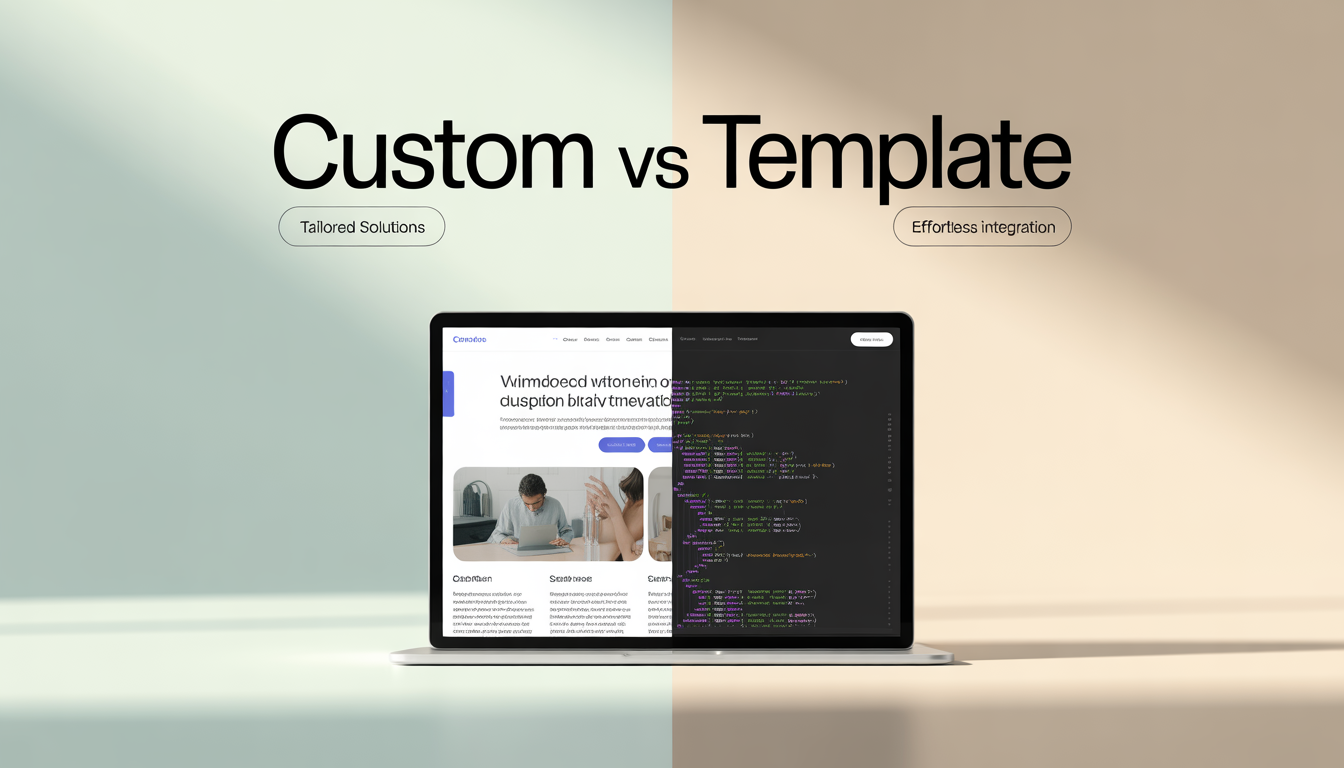
Many companies start with a template website — it's quick, relatively cheap, and seems like a logical solution at the start.
But as the business grows, such a website often becomes a brake rather than a development tool.
Let's figure out why this happens and at what points a template starts to work against you.
What is a Template Website Really
A template website is a ready-made structure with a limited set of settings:
It is created not for your business, but for an average user.
5 Reasons Why a Template Hinders Growth
1. You Look Like Everyone Else
When a client enters the site and sees a familiar template, they get the feeling:
“I’ve seen this somewhere before”
In B2B, this is critical — decisions are made not impulsively, but based on trust and expertise.
Identical design = lack of uniqueness = weak brand.
2. Functional Limitations
A template is great for:
But as soon as the business needs:
— you hit the ceiling.
3. Poor Conversion
Templates are created "by eye," not for your actual goals:
As a result:
4. SEO Limitations
Most templates:
This complicates:
5. Increased Cost of Modifications
At the start, a template seems cheap.
But every modification over time becomes:
In the end, you pay twice:
When a Custom Website is a Justified Solution
Custom development is necessary if:
A custom website is not just "pretty," but a tool for sales and processes.
What Makes a Custom Website Fundamentally Different
Conclusion
A template website is a temporary solution.
A custom website is an investment in growth.
If your website:
— then it is already stalling development.
🚀 Want to Understand if a Custom Website is Right for You?
We at Webula:
👉 Sign up for a free consultation — we will show you where you're losing clients and how to fix it.