Telematic 2.0: Why We Rebuilt Our Own Product from Scratch
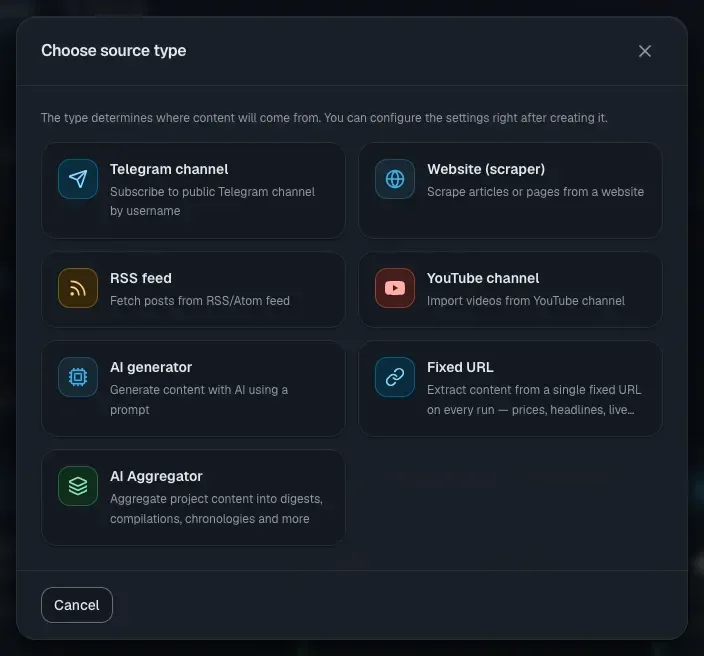
Last year we told you about Telematic.Pro, our service for automating Telegram channels. A lot has changed since then: in early 2026 we made a tough call and rewrote the product from scratch. Today it’s no longer an auto-poster — it’s an AI newsroom that writes posts, assembles videos and publishes them across ten platforms on its own. Here’s why it happened and what it taught us.

When a product outgrows its architecture
The first version was built in three months and handled its original job perfectly well: collect material from sources, rewrite it with AI and publish it to Telegram. Users came — and brought new requests with them:
Every one of these requests ran into the foundations. Version one was built around Telegram, with 17 tables, a single AI provider, two languages and not one automated test. Bolting video and new platforms on top of that would have been like adding a third floor to a foundation poured for a shed.

Rewriting doesn’t mean starting over
We kept what mattered most: our understanding of users, the workflows that had already proved their value, and the domain itself. Everything under the hood changed:
The first five weeks went into the core: sources, AI processing, the scheduler, platform integrations and payments. From there, the product grew on solid ground.
Video: the hardest part — and the most valuable
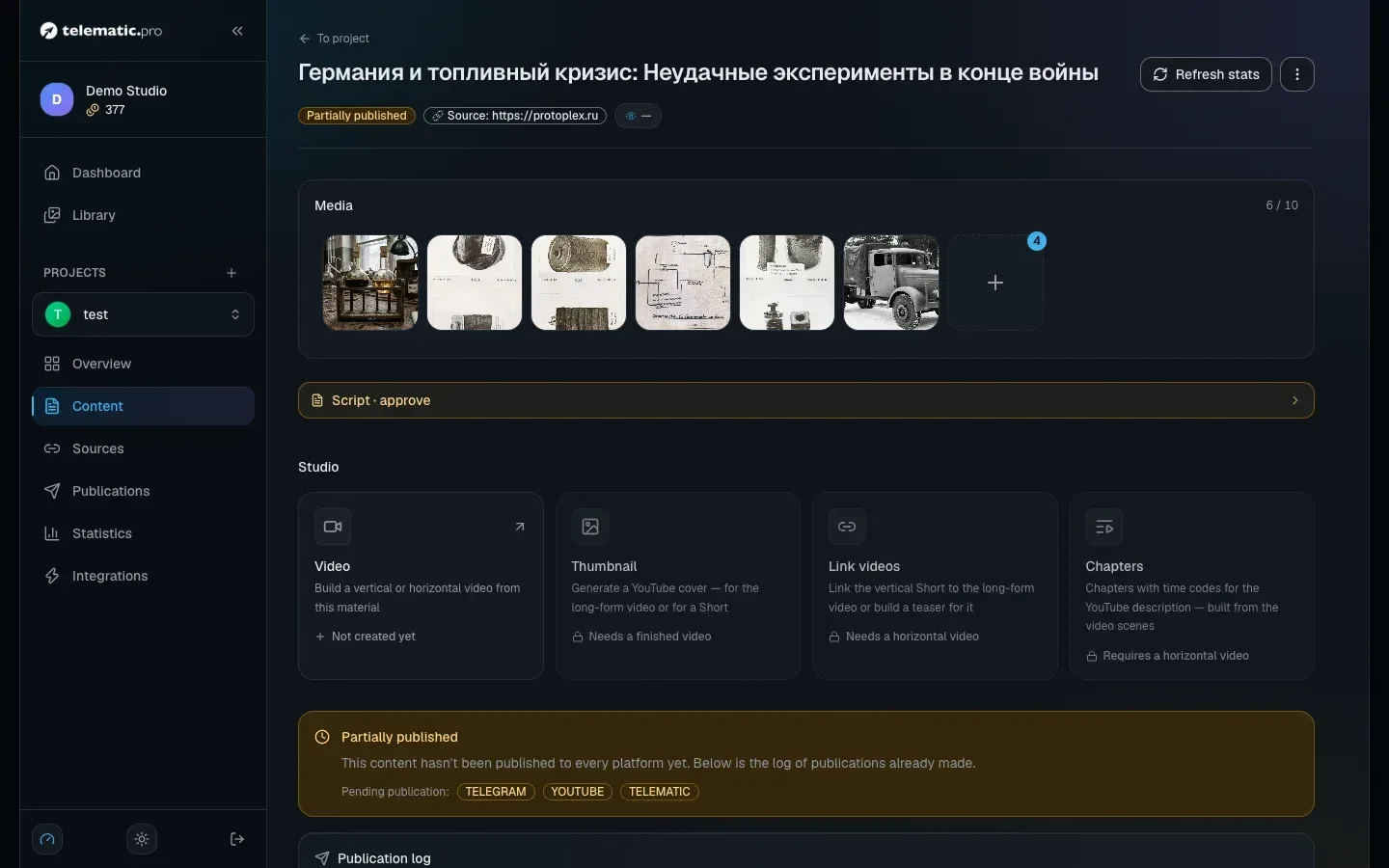
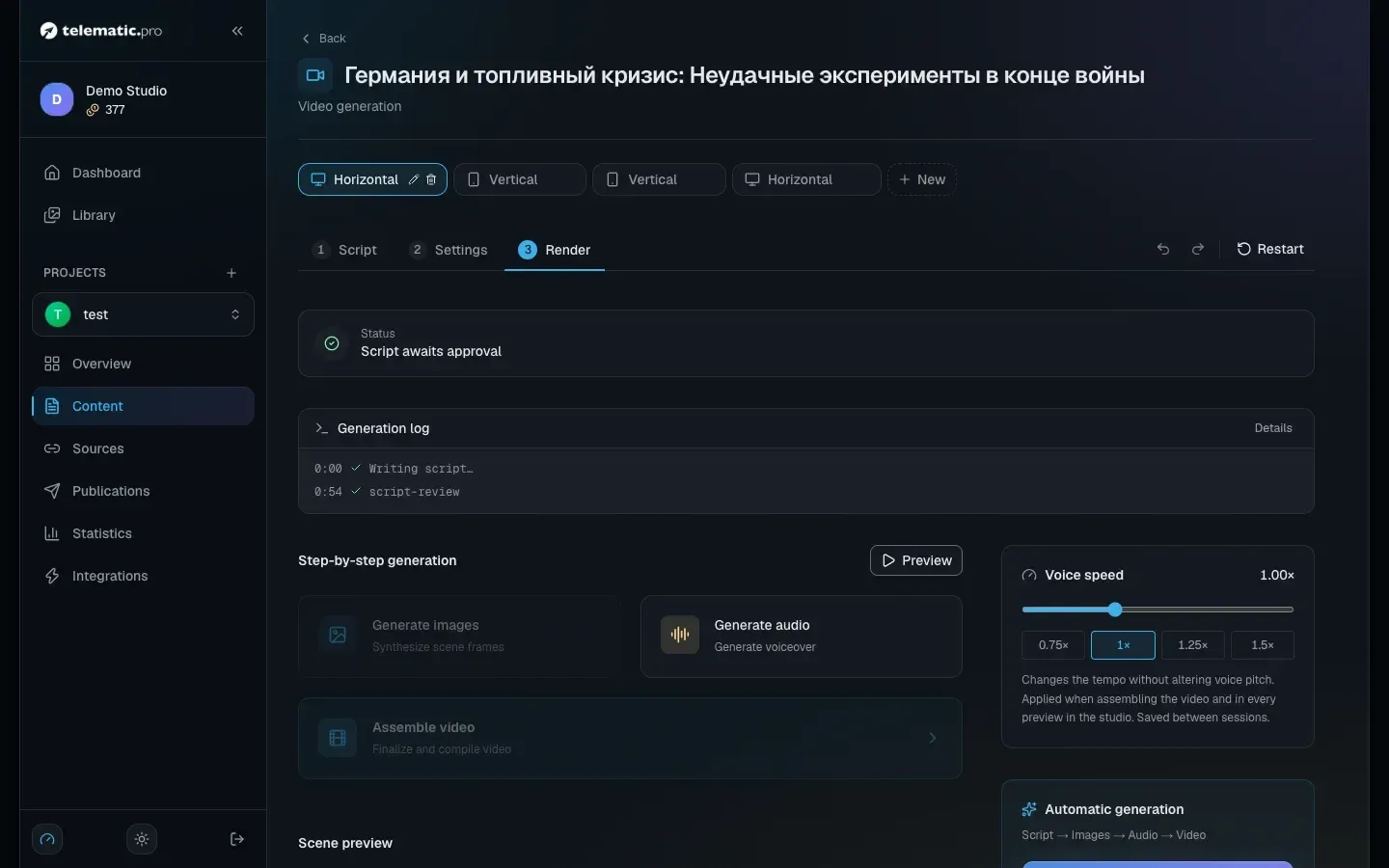
The biggest new feature in version two is producing video from text. AI writes a script and breaks it into scenes, the text is voiced with a synthetic voice or your own, captions, music and animated inserts are added, and then the video is edited together and published to YouTube, Shorts and social media.
Behind it are decisions users never see, but which make the product economically viable:
Autopilot: a product that works without the user
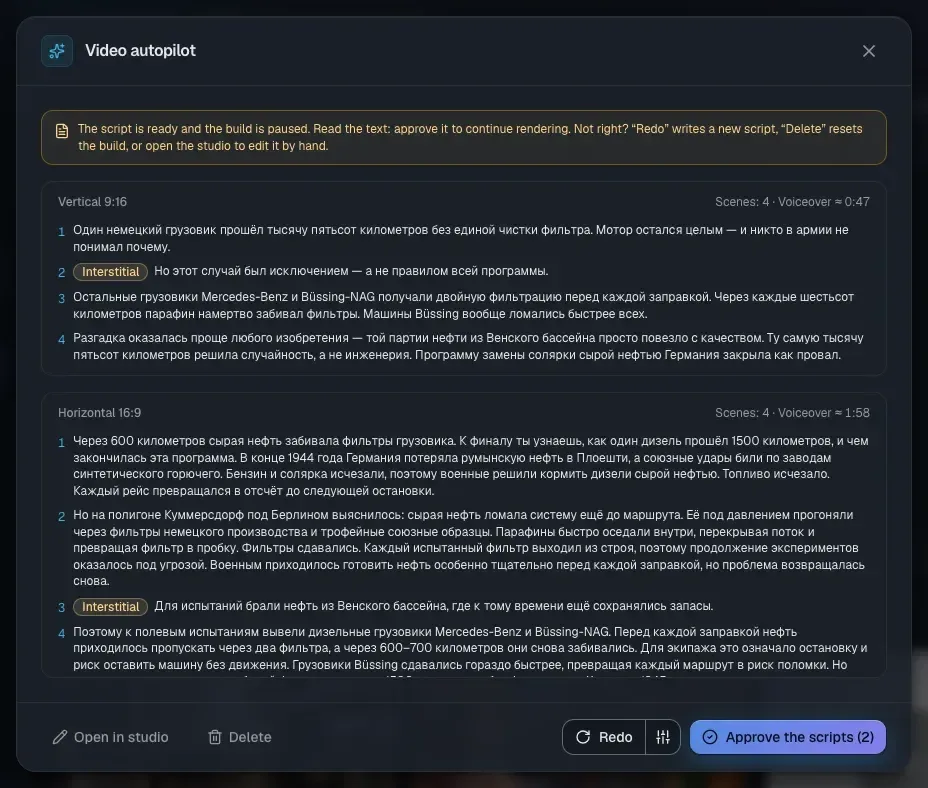
The best-case scenario for a client is to set everything up once and forget about it. Autopilot picks up fresh material from sources, prepares posts and videos, and sends them for approval or straight to publishing. According to the counter on the service’s website, autopilot has already published over 8,600 posts.
Growth as part of the product
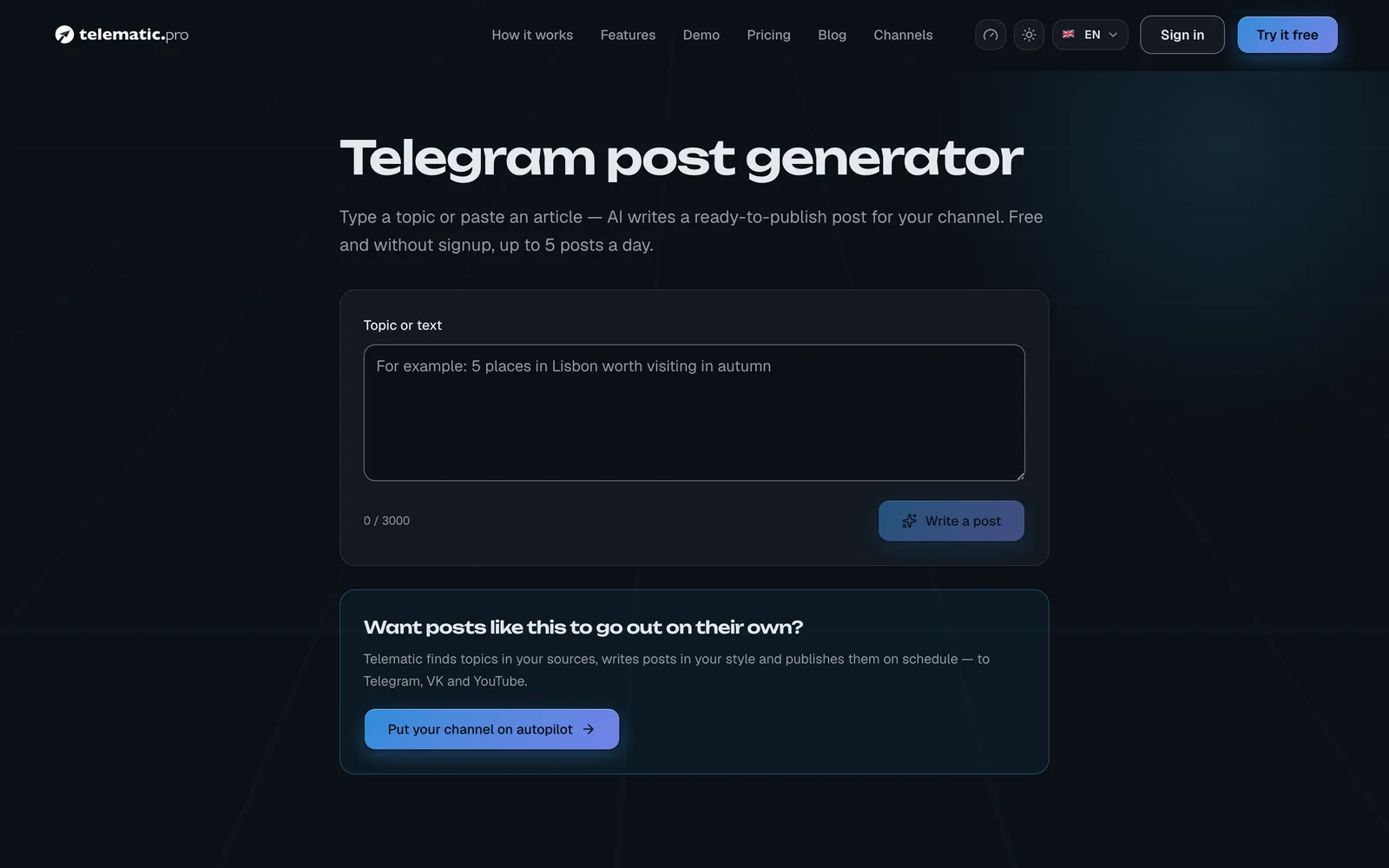
Another lesson: marketing works best when it’s built into the product, not bolted on beside it. Version two added a free post generator that needs no sign-up, pages for specific use cases and competitor comparisons, a knowledge base in 7 languages — and, for the team, a Growth hub with lead discovery, email A/B testing and AI-powered reply analysis. Today the service has around 1,000 pages in the search index.
When a rewrite from scratch is justified
A rewrite is an expensive decision, and more often than not the right move is to evolve the code you already have. But there are signs that the time has come:
Telematic ticked all four boxes. Over eight months and more than 1,400 iterations, the product grew from a Telegram auto-posting tool into a full-fledged AI newsroom.
The detailed case study with screens is in our portfolio, and you can try the service itself at telematic.pro.
If your product is also running up against its own architecture, tell us about your project and we’ll help you decide what pays off better: evolving it or rewriting it.